
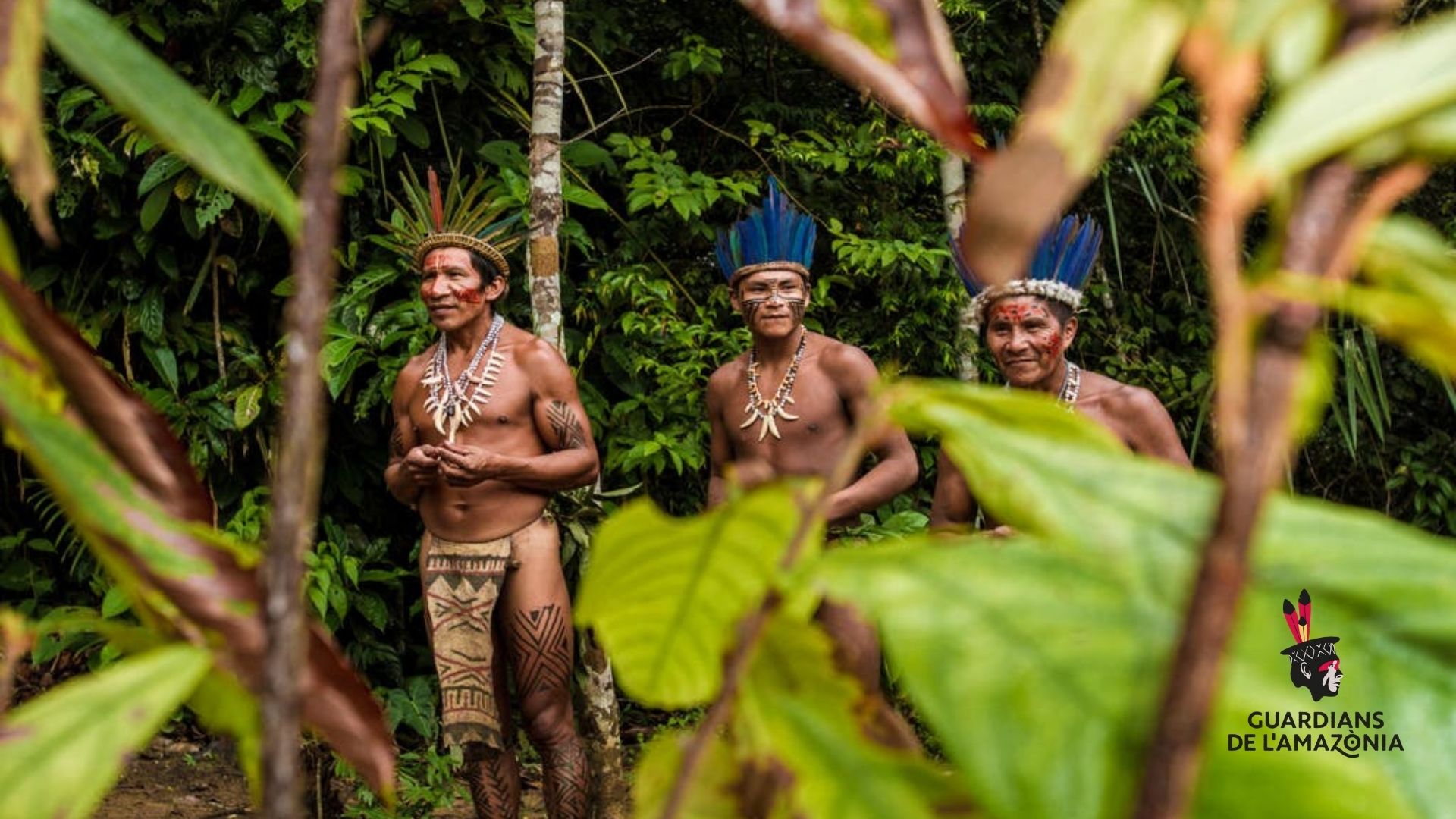
Traditional medicine is also considered a complex system composed of elements such as knowledge, traditions, practices, and beliefs, which are systematically organized through its own knowledge-holders (specialist therapists, midwives, health promoters, and traditional massage practitioners).
They have their own methods of diagnosis and treatment, as well as their own therapeutic resources, which are recognized as medicinal plants.
More specifically, traditional indigenous medicine encompasses those medical practices that originated before the colonial period within the social and geographic contexts of indigenous communities, as well as practices that have emerged from processes in which therapeutic methodologies are based on indigenous history, worldview, and cultural identity.
This highlights the deep-rooted nature of cultural traditions, making it possible to speak of different forms of traditional medicine depending on the community and the geographic region where they are practiced.
The close relationship between health and nature can be understood through the practice of traditional medicine within shamanic knowledge systems, which involves territorial healing and legitimization, as well as the management and use of resources.
When these aspects are addressed through the co-management of protected areas and indigenous territories, the relationship between health and territory also becomes evident.
Furthermore, this relationship is manifested through medicinal plants, which are plant species containing active ingredients with therapeutic properties that have been empirically or scientifically proven.
These produce secondary metabolites that are useful for addressing specific health issues in humans, thereby reflecting nature's influence on the chemistry and biology required for this process.
Traditional healers have extensive knowledge of this relationship and of the importance of these plants, not only in the biomedical field (diagnosis, treatment, or prevention of diseases) but also in the territorial and cultural organization of ethnic groups.
This refers to the fact that many medicinal plants are part of the community’s history, and their true owners may be spirits in another world (accessible only to shamans) or immortal beings who were never human; Consequently, their use depends on the negotiation between the shaman and these beings and on the permission granted to the shaman. This use of plants goes beyond the practical, as it involves remembering and preserving their stories, as well as uncovering their origins. Because of this, the mythical history of the plant is key to its use, as it explains the reasons why they are employed by the community.
The concept of traditional Tikuna3 medicine in Macedonia focuses on a person’s appropriate or inappropriate actions, as these directly influence their health or illness. Thus, healing lies more in changing behaviors that are morally unacceptable to the community than in the physical treatment of the body.
Based on this perception, beyond the biological dimension, one can speak of the relationship between diseases and morality as conceived within the community, which is justified by the formation of a cultural body. However, this relationship is not legitimized by traditional medicine; therefore, the approach to treating disease will not be similar, as it does not align with the validity of knowledge as defined by Western rationality.
In this reservation, medicinal plants are used in the form of “home remedies,” which exclude shamanism, folk healing, or any other form of pagan ritual that runs counter to the evangelical faith practiced in the community.
Among the medicinal plants most widely used in Macedonia are Yarumo (Cecropia sciadophylla), Carambola (Averrhoa carambola), and Cat’s Claw (Uncaria tomentosa), which are used by indigenous peoples based on knowledge rooted in each individual’s relationship with the physical environment, as shaped by their life experiences.
Indigenous traditional knowledge can be understood as a cumulative system of informal knowledge, resulting from empirical observation and the oral transmission of experience passed down from one generation to the next. In this sense, knowledge about the medicinal uses of the Yarumo, Carambolo, and Uña de Gato plants within the community is likely passed down from the elders to the younger generations.
Knowledge of the medicinal uses of plants was most prevalent among the older age group, particularly regarding Cat’s Claw and Yarumo (82% for both plants). In contrast, among the younger age group, the majority were unaware of the possible medicinal uses of Cat’s Claw (67%). In the 43–60 age group, all individuals were aware of at least one medicinal use of Yarumo.
Upon investigating the sources of knowledge for each plant, it was found that the family—especially the grandparents—continues to play a significant role in passing down knowledge through oral tradition and everyday activities.
However, the use of the mother plant was low for both Carambolo and Yarumo, and nonexistent for Uña de Gato. It is likely that the difficulty in accessing the latter within the Reservation—due to its scarcity and the long distances that must be traveled to obtain it—has led to a preference for other, more readily available medicinal plants.
Consequently, knowledge about the use of cat’s claw has been largely confined to knowledgeable elders, who have had contact with people from outside the community and from whom they have acquired part of their knowledge. This type of knowledge is known as “distributed knowledge” because it is not shared by the entire community, but it is known who possesses it, and people turn to them for guidance.
The results from the three villages demonstrate the influence of information sources outside the Reservation—both domestic and foreign—on the two extreme age groups (youth and the elderly); therefore, interethnic relations with other indigenous communities and with Western culture have a constant impact on the traditional learning process within Macedonia.
However, since the 1970s, the WHO has emphasized the need to integrate traditional medicines into Western medicine, primarily for cultural and economic reasons, since 80% of the world’s population lacks access to Western medicine and therefore relies on traditional medicine.
In this exotic location, we find an incredibly diverse array of plants used to produce most of the medicines we use today. Well-known pharmaceutical companies such as Bayer source their raw materials from this area to manufacture their products. We will discuss these traditional methods—techniques passed down from father to son, from one generation to the next. These methods, while they may seem rudimentary or bizarre to us, are 100% natural and effective.
GINGER: This is a tuber with a strong, exotic flavor that we typically use to add flavor to our dishes—whether they’re desserts, salads, sauces, etc. However, if we focus on its medicinal benefits, ginger is used in this culture as a pain reliever and anti-inflammatory, as well as a remedy for nausea, thanks to the presence of phenols and gingerols in its root. A type of ginger tea is made by letting the root steep in boiling water for a few minutes. When ingested, it relieves pain and nausea. When warm compresses moistened with this remedy are applied to an inflamed area, the swelling and pain subside.
In our culture, some athletes add ginger to their protein shakes and use antioxidants as part of their injury recovery process.
SPIDER WEB: Spider web is used by indigenous peoples as a coagulant. When a wound or cut occurs, a piece of this strong, sticky substance is applied to the bleeding area, causing the blood to clot and accelerating the healing process. The web, specifically, is extracted from the black widow, one of the most exotic and venomous spiders in the world. It has been shown that fibroin (a structural protein) present in the spider’s web is responsible for this medicinal function. Scientists at the University of California have succeeded in isolating the genetic sequence necessary for the synthesis of fibroin in order to produce it on a commercial scale and develop medications.
THE CHIRIMOYA: This fruit is native to the Americas, and its name means “cold seeds,” since it germinates at high altitudes.
It began to be cultivated in Europe following the conquest of the Americas, and from there it was brought to the East by Spanish explorers. It has countless health benefits: it improves memory, reduces daily stress, and is easily digested due to the high amount of hydrolytic enzymes it contains, in addition to vitamin C, proteins, sugars, phosphorus, antioxidants, and more. However, this fruit is particularly helpful during childbirth—an astonishing benefit. The cherimoya seeds are boiled in a little water and given to indigenous women just before and during labor to speed up the process. It acts like prostaglandins, causing the smooth muscle tissue of the uterus to contract during labor. Furthermore, the cytotoxic effect of cherimoya seeds has been demonstrated, helping to prevent cervical cancer, breast cancer, and leukemia. This led a group of students to win the Abeefe Brystol Meyers Nobel Prize in Medicine in 2007. In short, it is a true superhero with anticancer, antioxidant, and laxative properties, among others.
These are just a few examples of the vast array of traditional medicine found in indigenous cultures, which may seem strange and unusual to us. However, its effectiveness has been proven, not only by studies conducted at various universities, but also because these remedies have been in use for thousands of years and their chemical components are used to manufacture our much-valued medications.
Amazonian communities are developing strategies to combat the virus through their traditional medicine, utilizing a variety of preventive plants aimed at strengthening the immune system related to the respiratory tract.
One such response that has emerged in the Peruvian Amazon—and which could be seen as part of this set of home remedies designed to alleviate the severity of a respiratory problem—is the creation of the intrepid “Comando matico.” Aside from being an ironic response to the famous “Comando Covid,” a group of young people in Pucallpa has come together to fill a gap, with the goal of providing medicinal plants to quarantined villages near the city, especially to families already showing symptoms of respiratory disorders. They operate in the districts of Yarinacocha, Manantay, and Callería, and due to the impact this initiative has had, it is being replicated in other areas, such as the Province of Padre Abad, in the villages along the banks of the Aguaytía River.
This initiative by the “Comando Matico” does not stem from a spontaneous and improvised humanitarian impulse, but rather from an age-old practice whose components are ancestral wisdom and solidarity; both of which are part of the fundamental strategies that have enabled indigenous peoples to survive throughout their history, especially since the arrival of Westerners in the Americas—an arrival that, directly or indirectly, has been the cause of the many pandemics that have decimated their populations. This practice has a central ritual around which traditional medicine and Amazonian indigenous spirituality are organized. Its name is quite well known—probably much more so on other continents than in Peru itself—and it is called “the ayahuasca ceremony.” Here is a summary of the procedure.
The Ayahuasca Ceremony
When the tropical sunset has yielded all its charms to the night and the dark cloak has spread from the shadows of the trees to the most open of spaces, penetrating even the gazes of the animals lurking in the forest, the table is set for the ayahuasca ceremony.
The centerpiece of the ceremony is a drink made from the master plant called ayahuasca and its companion, the chacuruna. The great spirits of the forest plants dwell within them. Participants drink this dark brown liquid—thick in texture, with a bittersweet taste and the scent of plant offerings—in a precise dose that the master guide serves to each one. Previously, the medicine man, after speaking with the participant, has assessed his patient and prescribed a strict diet; in this way, he knows the exact amount of the “dose” so that, once the brew is ingested, it will guide the participant step by step through the—sometimes inhospitable—journey of his soul.
The preparatory diet has put the bodies in the right frame of mind to receive the master plant. Shortly after taking the dose, when fireflies dot the darkness with their sparks of fire and the chirping of crickets cuts through the oblong murmurs of the jungle, the lightened bodies relax and feel a slight chill. Thus begins the communion among the participants, who, while remaining themselves, are also part of the group.
The process of introspection that the consumption of the ceremonial substance initiates begins with a series of associations, memories, projections, concerns, and all that emotional turmoil that so often weighs us down. Then come the first visions in the form of a complex geometry of phosphorescent, zigzagging lines that produce a dizzying sensation of accelerated movement.
This gives way to the moment when we experience the fragmented state imposed on us by the routines of daily life. It is the moment of fragmentation and “dizziness,” the moment when evil is expelled. Here, the body seeks to shed physical and emotional excesses—the tensions and fears that materialize in the form of intestinal fluids and in the excessive tension of muscles and tendons disintegrated into irreconcilable fragments. Then come the retching fits that force you to expel—both physically and emotionally, sometimes abruptly and uncomfortably—everything that prevents the calm and the symbolic flight that the ceremony participant is about to undertake. This is the part where the master plants cleanse the organism of everything that has hindered the free and harmonious movement of the bodies in unity with the souls.
After the battle, the body regains its warmth and enters the stage of visions. Mind and emotion embark on a biographical journey in which the most unsettling memories that have shaped our lives appear in the form of images. Image after image, the personal journey is reviewed at a rapid pace, in stark contrast to the stillness and lethargy of the organs, muscles, and bones that lie at rest in the maloca. During this part of the ceremony, the master healer—the traditional doctor, the medicine man—intones the sacred songs called “ikaros.” These are timeless songs that have been passed down from parents to children, generation after generation, through the power of medicinal plants, among the ancient Amazonian cultures. Each community has preserved this legacy, adapting it to the sounds of its language and the mythology of its lineage as a song that encapsulates the unfathomable sounds of the jungle. The images may appear in an orderly sequence or in a chaotic array of fantastical visions. The master, equipped with a mapacho and attentive to the effect of the visions, guides the patient with an individual ikaro and with deep puffs of tobacco smoke, which, at this stage of the ceremony, joins—with its protective spirit—this moment of encounter and unification.
Ikaros are repetitive, haunting melodies that the master sings during the ceremony. If the “dizziness” reaches a level that is difficult to manage, the ikaros will help weather the storm. With these songs—featuring high-pitched modulations that are soft and delicate at times, alternating with low, martial sounds—the master renews his connection with the group and with each participant at every moment throughout the night. These sacred chants follow a structure consisting of a beginning, a middle, and an end: an opening chant, which simultaneously envelops the group in a protective layer; followed by a series of developmental chants; and finally, a closing chant.
The message conveyed by the final song is known as an “arkano” and is a protective charm in the form of a melody, which the acolyte will carry with him to the next ceremony and, depending on his inner spiritual journey, will accompany him throughout his life.
It is important to note that traditional indigenous medicine is a body of knowledge, practices, and beliefs within a culture that provides a holistic understanding of health in its physical, spiritual, and environmental dimensions.
I like it when people get together and share their thoughts. Great blog—keep up the good work! Georgianne Elijah Pesek
Excellent blog post. I really love this site. Keep it up! Libbi Colin Tonjes