
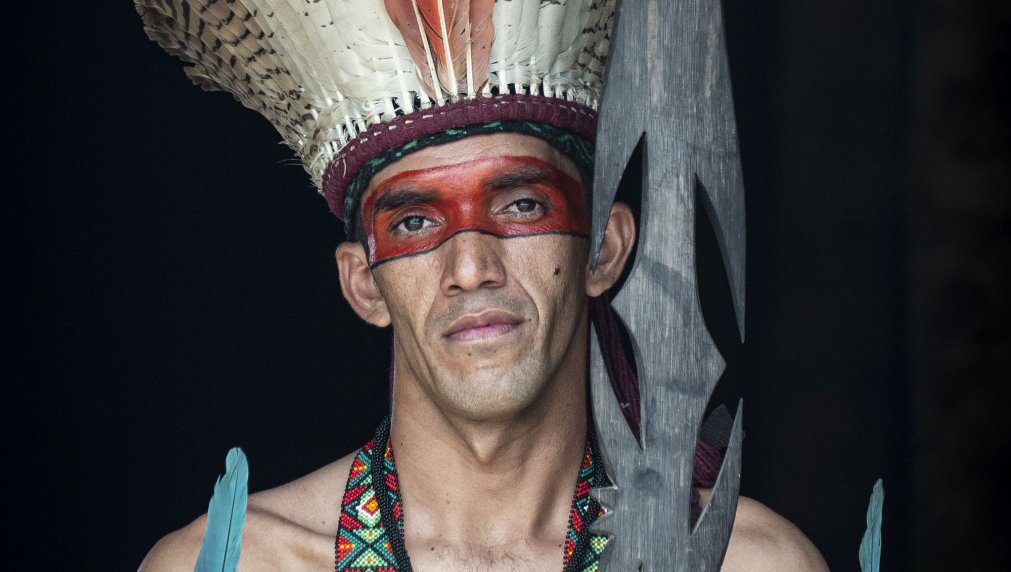
An interview with Puwe Puyanawa, the spiritual leader of the Puyanawa tribe in Brazil
In mid-February of this year, I spent two weeks in the Puyanawa tribe’s village in the Amazon jungle. I learned about otherness. I learned to listen, to look, to live, to understand. And also to simply be quiet. I took part in rituals and learned humility. I learned that permission must be asked for everything—even from the forest, rivers, plants, and insects. I also learned that rationality is relative and that everything can change in a single moment—such as when a monsoon cloud arrives or the wind begins to blow from the Andes Mountains. That’s just the way things are, and one must adapt to them.
As with many other indigenous tribes in the Brazilian state of Acre, life for the Puyanawa tribe changed completely in the early 20th century as a result of the so-called “rubber barons,” who began taking over Indigenous lands and resources without any regard for the people already living there. Their first attempts to locate the indigenous inhabitants took place as early as 1901, under the leadership of Colonel Mâncio Lima. His expedition tracked the local Indians for eleven days but was unable to locate them or their settlements, finding only signs of their recent presence. The Puyanawa tribe successfully evaded Mâncio Lima’s henchmen for ten years. In 1911, however, the colonizers found the tribe, and the massacre began. Some of the Indians managed to flee, while the rest were forcibly Christianized and enslaved on the rubber plantations. Those who refused to work or were unable to adapt to the new system were killed. Many more succumbed to previously unknown diseases introduced by the colonizers, mainly measles. The Puyanawa tribe’s traditions were banned in a deliberate effort to eradicate any trace of their culture.
It's finally time for us to wake up and realize that all of us—men, women, and children—are part of the Big Forest.
The tribe was relocated from its historical territory to Mâncio Lima’s plantation estate, Barão do Rio Branco, on the banks of the Moa River. The Indians refer to the years from 1915 to 1950 as the “period of captivity.” The colonizers separated the men from the women; the men were sent to work on the rubber plantations, while the women were assigned to agricultural labor. The Puyanawa had become slaves with no rights—all their lands had been taken from them, and for their labor they received only food and a few pieces of clothing. The forest, which had once been their home and the source of all their traditions, was cut down to make way for sugarcane plantations and livestock farming. Their small jungle trails were turned into “rubber roads.” Their language, which they call Ûdikuî, or “the true language,” was banned, and anyone caught trying to speak it was punished. Only Portuguese was taught in the schools.
The tribe was finally freed from slavery after Mâncio Lima’s death in 1950. By that time, however, its self-confidence had been irreparably undermined. The Puyanawa had become Christians who were uncomfortable with their indigenous identity. They were ashamed of their roots. By the 1980s, only the oldest members of the tribe knew how to make bows and arrows and paint their bodies according to their ancient customs. They had also lost their ancient knowledge of plants and their medicinal properties, as well as ayahuasca, the sacred ritual drink at the heart of indigenous Amazonian spiritual culture.
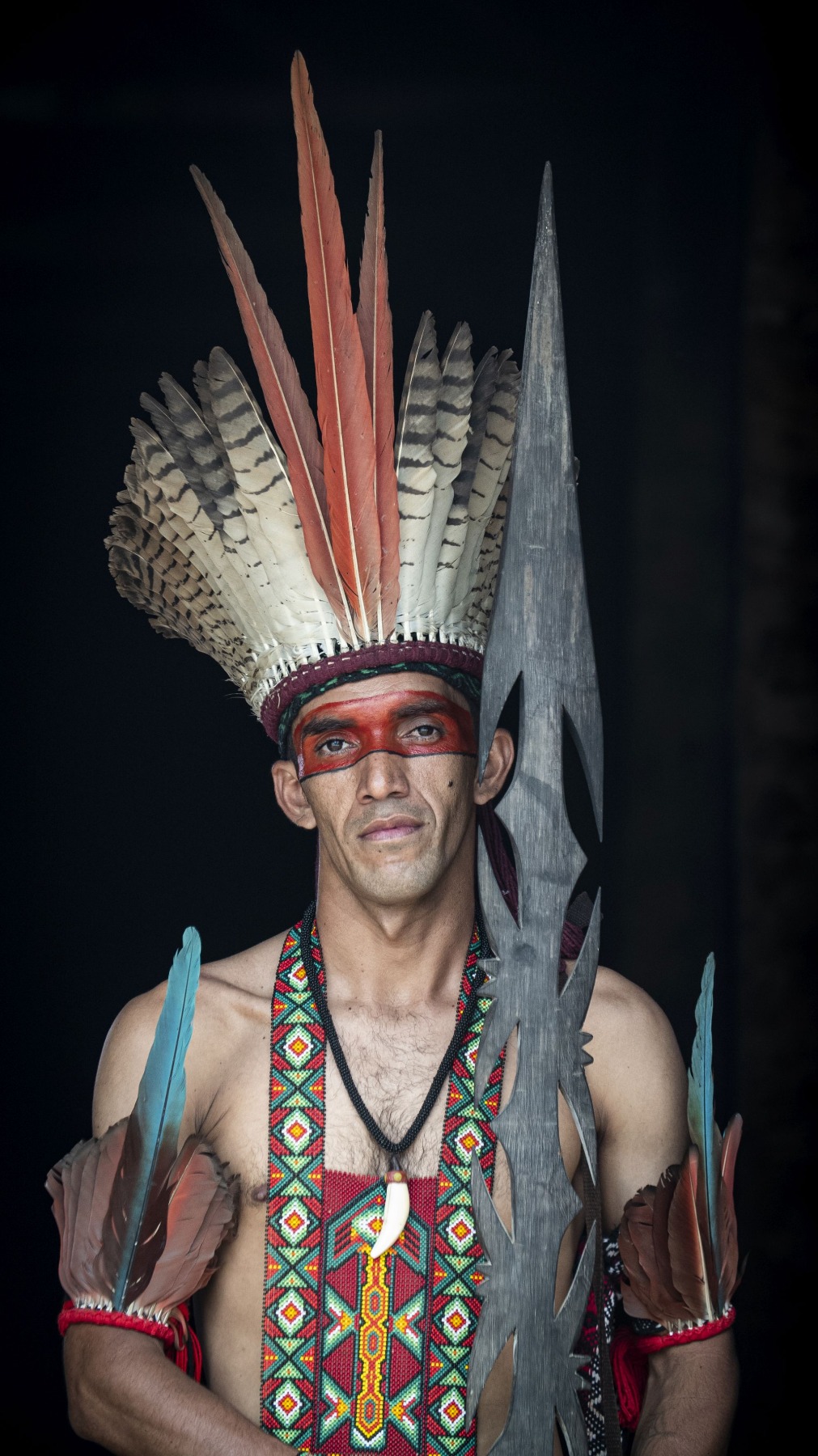
The Puyanawa tribe’s rebirth began only in the 1990s, when they finally succeeded in demarcating their territory, thereby legitimizing it and closing it off to hunters, loggers, and other “uninvited guests.” This act symbolically marked the tribe’s official rebirth. However, only twelve of the 385 tribe members at that time were able to speak the old Puyanawa language. Today, that language has been almost completely revived, along with the tribe’s ancient traditions. There is still a Christian church in the village, but it has largely fallen silent—unlike the ritual ceremonies held on Saturdays. The former priest—a Puyanawa tribal chief and political leader—has renounced Christianity and is now one of the driving forces behind cultural initiatives within the tribe. He was inspired to change course by ayahuasca, which showed him that there is only one path to the tribe’s survival and future.
The mythological drink, which despite its contradictory status (ayahuasca contains DMT, the hallucinogenic substance dimethyltryptamine that has been on the list of illegal substances since the 1960s; however, this same substance can be found in each of our bodies, reaching its highest concentration at the moments of our birth and death) is also becoming increasingly popular in the Western world, has been the lifeblood of the tribe for more than twenty years. Both men and women participate in the preparation of ayahuasca, with the men heading into the jungle to collect a special kind of vine, while the women gather the leaves of the chacruna tree. The boiling process begins around three in the morning. First, the vine stems are broken up with wooden hammers, and then they are boiled in water for eight hours along with the chacruna leaves. Just as no two trees in the forest are alike, each batch of ayahuasca and its effects are slightly different. Sometimes it grounds the body and anchors it; other times it might carry a person on unexpected flights of vision. Ayahuasca is a thread that has helped the Puyanawa tribe renew its historical traditions, its language, its symbols, its drawings, and its artwork. And it is a part of their daily life. Tribal hunters do not go into the rainforest without ayahuasca, and the drink is used to recover ancient songs.
Puwe Puyanawa, the tribe’s spiritual leader, and his wife, Vari Puyanawa, have played an important role in driving the tribe’s process of rebirth. Since 2013, having essentially become a sort of envoy for the tribe and begun traveling to Europe, Puwe has put the Puyanawa’s story on the global cultural map. He also participated in the Indigenous Peoples and Climate Change conference in Paris organized by UNESCO in 2015, which, before an audience of 40,000 politicians and experts, highlighted the scale of global irresponsibility and the damage inflicted on the Amazon rainforests by gas companies, mining firms, and drug traffickers. A documentary film produced in collaboration with the Puyanawa tribe is currently in production. Titled Sacred Land Peyabakebu Puyanawa, it traces 120 years of the tribe’s history. One of its goals is to use the story of the Puyanawa tribe to shed light on the fate of all the indigenous tribes in the Amazon, as well as to raise awareness about and advance the slow and difficult process the Puyanawa are undergoing to reclaim all of their ancestral lands.
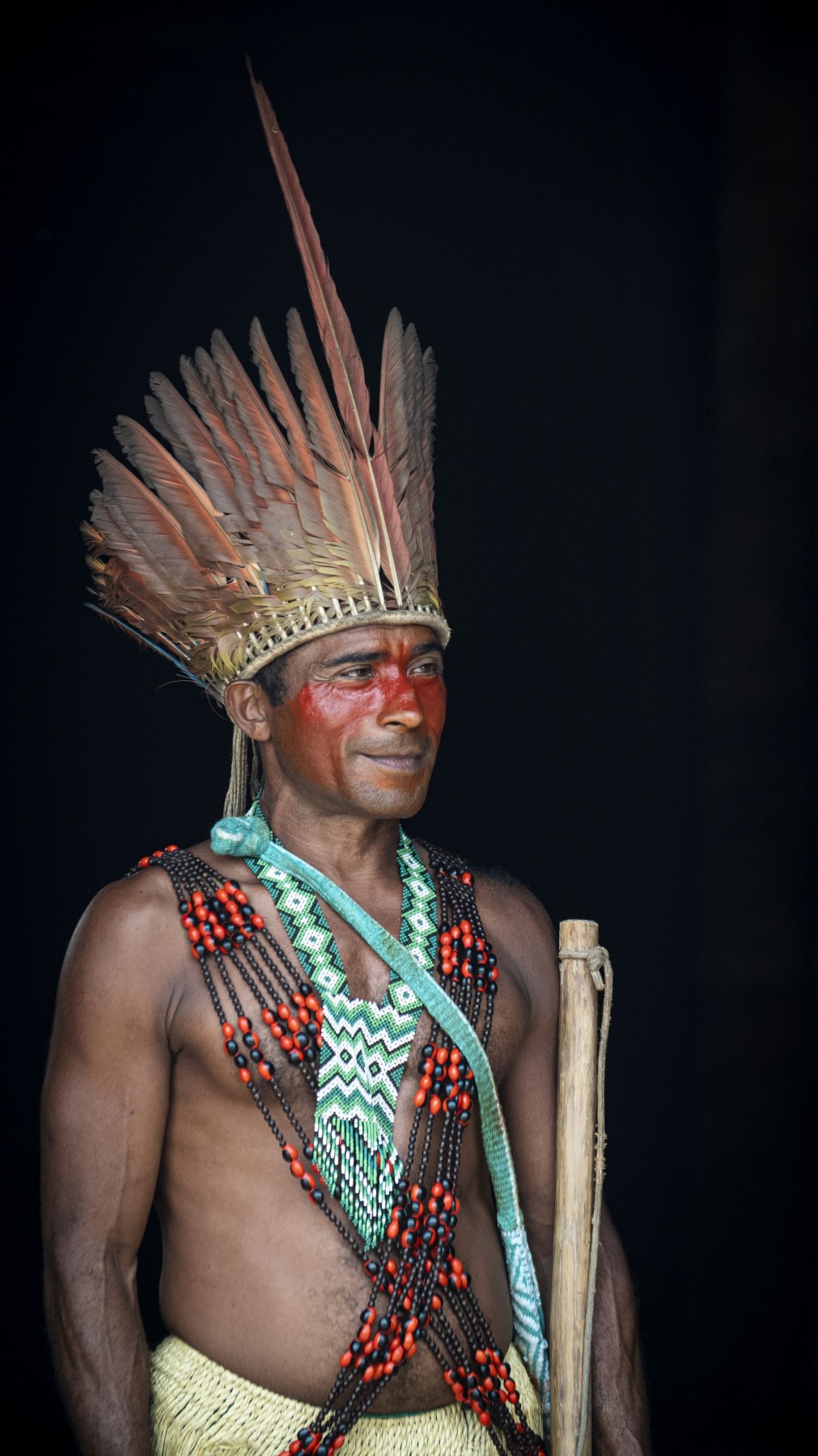
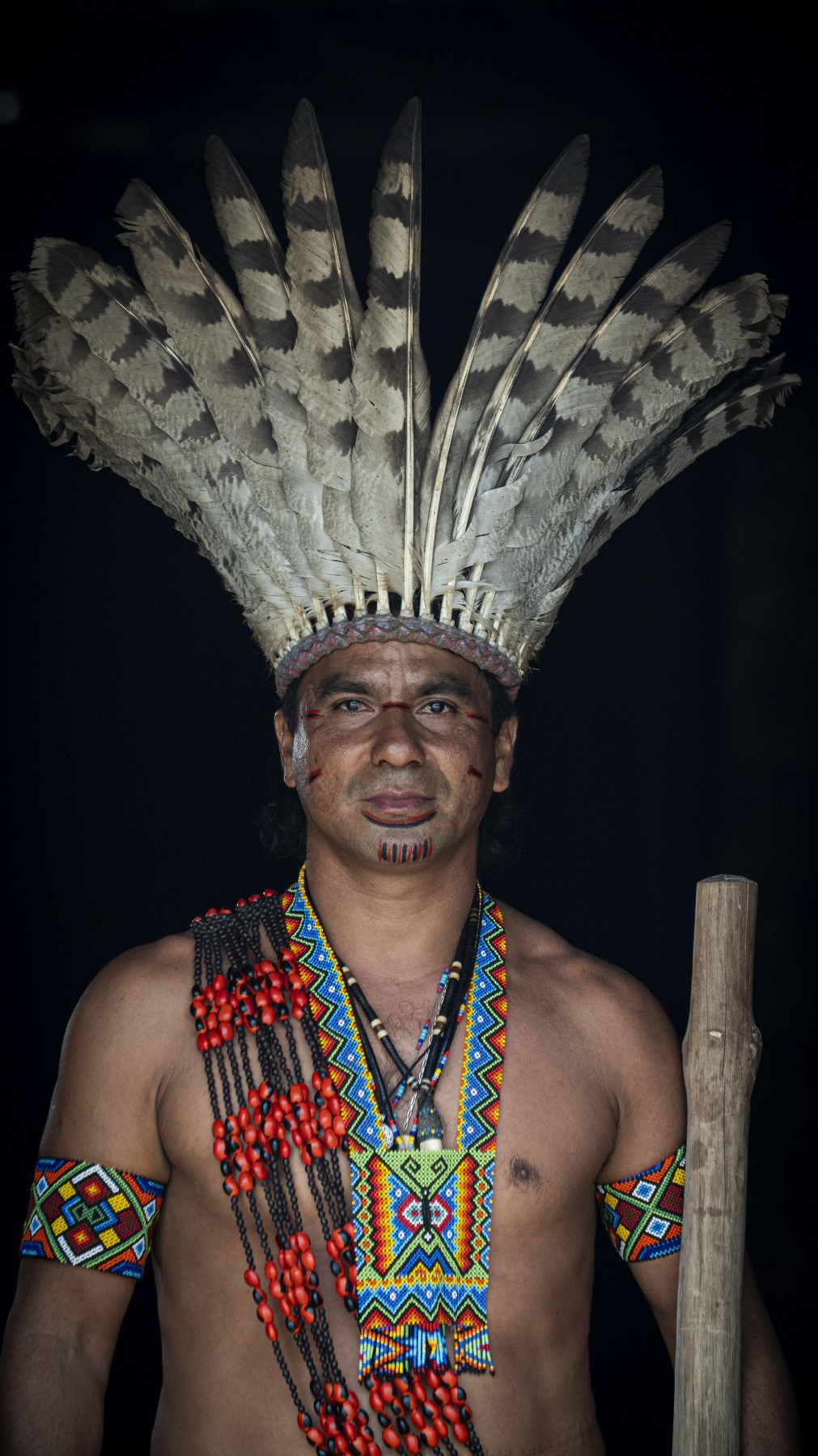
Puwe Puyanawa is unusually tall for an Amazonian Indian, although the same is said of his entire tribe. In everyday life and conversation, he is a very sincere and down-to-earth man. However, his character changes completely during rituals. Adorned with traditional jewelry and ornaments, he takes on a stateliness that is difficult to describe in words, and when he sings the ancient songs, his voice reverberates with such power that he seems to sing with his whole body. This conversation took place on the steps next to the large ceremonial space in the village of Puyanawa, in Portuguese (with the help of an interpreter), against a backdrop of voices and sounds produced by all the visible and invisible inhabitants of the rainforest.
You grew up in a completely different world. What was the turning point for you? At what point did you decide to return to your tribe’s traditions, and what motivated you to do so?
I spent part of my life as José Luís —my Christian name—but now I’m one of my tribe’s leaders. A political, religious, and cultural leader. I’m also a musician, along with my wife, Vari, and our two daughters. I’m forty years old now, and I was born and raised in this village. But I’ve had a very close connection to the rainforest ever since I was a young child. When you grow up in a place like this, you start learning very early on how to live in harmony with nature. I don’t even want to talk much about my tribe’s history, because it’s a history of suffering. It’s a story about how we lost all of our traditions—our cultural heritage. One hundred twenty years ago, we were completely forbidden from practicing our tribe’s culture. All the values associated with our culture were rejected and denied. Our way of life was violently altered.
I’m a biologist by training, and I’m currently working as a teacher. My family is the largest in our tribe, and it’s only recently that our tribe has once again undergone major changes, having managed to revive a large part of our historical traditions. Today we are recognized in Brazil and around the world as the Puyanawa tribe. On May 17, it will be exactly twenty years since we began our struggle to reclaim our ancestral lands. In total, we have 44,000 hectares of land, but we still haven’t regained all of it. Some of it remains in private hands, and in order to reclaim that land, we have to buy it from the current owners—for approximately four million Brazilian reais.
Right now, we have 670 members in the Puyanawa tribe, but those are only the people living in this village. There are many other Puyanawa people living elsewhere. When the colonizers invaded 120 years ago, some of our ancestors managed to escape, and they never returned to their ancestral lands. In total, we are 150 families today—divided into two tribes.
When I was seventeen years old, I realized that I really wanted to try drinking ayahuasca, to feel the power of this ancient medicine and to gain knowledge. For our ancestors, the ayahuasca ritual was an integral part of their spiritual culture, but when the tribe was relocated to this area, the practice was categorically banned. Between 1995 and 2000, we made intense efforts to contact other tribes and asked them to help us regain this knowledge. In fact, this process had already begun in the late 1970s, when shamans from other tribes— shaman from the Asháninka, Huni Kuin, and Yawanawa tribes—visited our village on their journeys and helped to replant the seed of this ancient knowledge within us. I was still just a very young child back then, but when I began to show an interest in it, I was most troubled by the fact that our tribe’s leaders at the time did not possess any of this knowledge themselves. Yes, some of them knew about ayahuasca, but they didn’t want to talk about it because they were Christians, and the Christian faith had banned the practice. In the beginning, we didn’t have enough knowledge about making ayahuasca either, and we made a lot of mistakes. The Asháninca and other tribes provided us with a great deal of help in reviving this tradition, as did other groups that prepare and drink ayahuasca, such as the Santo Daime and UDV. However, it took five years from the moment we began making and using it again to truly awaken our ancestral spirit, which had almost completely fallen asleep.
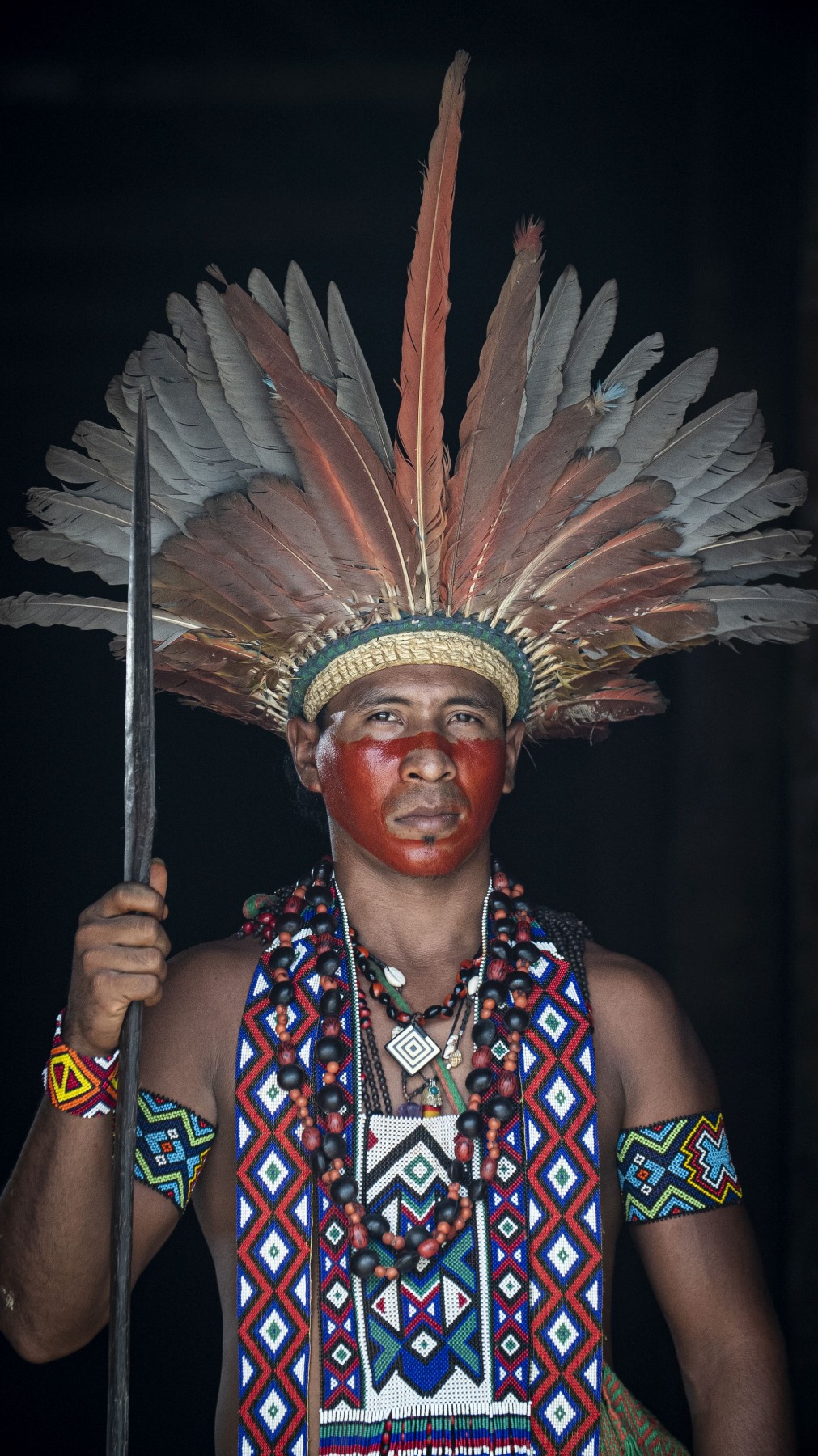
The spirit really didn't regain its strength until 2006 or 2007, and ever since my wife, Vari, and I began walking this path, ayahuasca has allowed us to remember our tribe's traditions, many of which had already died out—including our language, our songs, and our symbols… In 2008, we opened this large ceremonial space (called a maloca) and cultural center, where all the tribes living in the state of Acre could gather from time to time. And it was at the first of those gatherings that we were able to revive much of the knowledge of the Great Forest that we had lost when our tribe’s history was disrupted. I remember when I and other representatives of our tribe opened this meeting—which had brought together people from fourteen different tribes—we had nothing to show the others about our own culture. Only fifteen people from our tribe had ever drunk ayahuasca before, but I wasn’t worried, because I knew this was only the beginning.
Now, twelve years later, most of the tribe is involved in the process. Every Saturday, a large ceremony takes place in the village, and it always draws more than a hundred people—from our own tribe as well as people from the surrounding area. And at each of these ceremonies, we are strengthened in our growth and development—both spiritually and socially. Now we have our own songs in our own language. We’ve come a long way, and over time we’ve learned a great deal about our land, our history, plants, and their medicinal properties. Kasiki, who is the village chief, and I are the main driving forces behind this process. Through ayahuasca, we’ve gained greater strength, security, and conviction. Moreover, we can share this knowledge with others. I have no doubt that ayahuasca can help save the planet. However, I don’t think every ayahuasca experience is capable of doing so. It must have the proper guidance and purpose.
What is ayahuasca? It is simply a combination of two plants: a vine and chacruna leaves.
For me, ayahuasca is the greatest of teachers—in defense and protection, in guiding knowledge, in understanding, and in wisdom. It is the path through which one can learn the knowledge of the ancestors and the knowledge of the world as a whole.
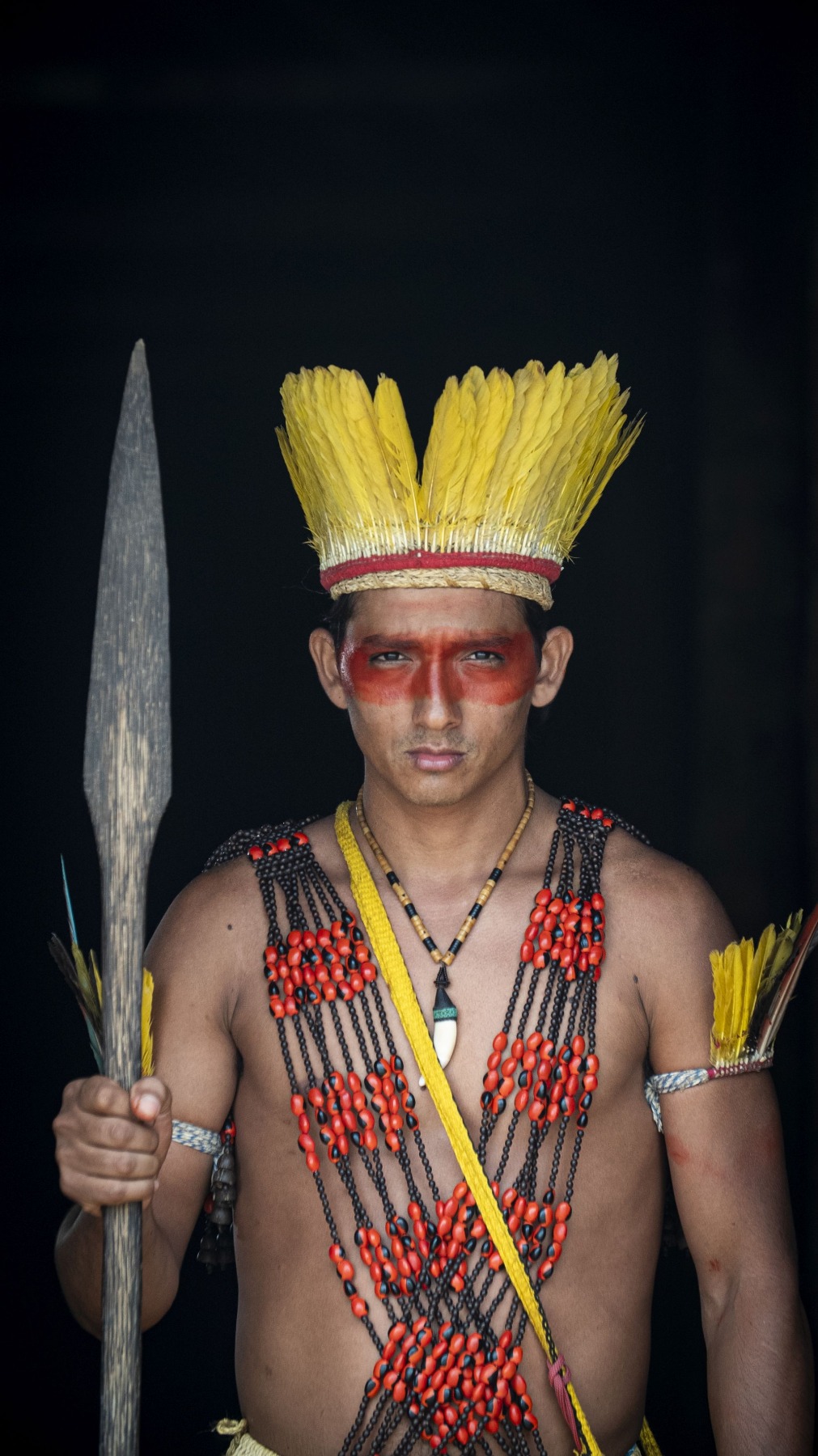
Why was it banned, and why is it still banned?
In the past, ayahuasca was banned because it was part of our culture. Back then, absolutely everything related to our culture was banned, including ayahuasca. These days, I think it’s banned because the people who imposed this ban and continue to enforce it don’t actually know what ayahuasca is. So, it’s banned due to a lack of knowledge.
Would you have been able to return to your tribe’s traditions and your cultural heritage without the help of ayahuasca?
Maybe, but in that case it would have been a much longer process—many, many, many years. Because there are certain things you can only experience through ayahuasca. For example, our spirituality is very closely linked to ayahuasca, but it’s possible that ayahuasca isn’t necessary for the rest of our tribe’s cultural life. Although these two entities—culture and spirituality—might seem like the same thing, they’re actually not. Culture is found in songs, drawings, and artwork, dances, and food. It’s a part of everyday life—an integral part of everyday life. Culture is within the family, but spirituality is something you consciously need to work on.
What is spirituality?
For me, spirituality means knowing our ancestors’ teachers, knowing the ancient symbols that have protective powers, and so on. For example, the source of a tribe’s spirituality always remains in the land where the tribe originated. People who visit this place can obtain this spiritual heritage—they can receive it from the place where this knowledge originated. When I drink ayahuasca, I also see how and in what kinds of houses my ancestors lived. I can picture this entire process that my tribe has gone through to arrive at this moment—five generations already. But of course, there are also people who don’t drink ayahuasca, and they can have these visions, too. But it’s much harder.
Undeniably, it is also possible to reach this special state without the help of plants. It can be achieved through meditation. I mean, with meditation you can attain the same level of spirituality as you can with ayahuasca. In various cultures, you can find various plants that possess this power—so-called “master plants”—to take you to this special world.
Do you believe that ayahuasca is a spirit in and of itself, or is it a drink that connects you with the spirit?
It's both. It's a spirit that helps you connect.
Do you think plants have some kind of intelligence? After all, how did our tribal ancestors long ago know that, of the more than 30,000 plants growing in the Amazon rainforest, these two plants, of all others, needed to be combined?
The ayahuasca vine is a plant that possesses power, while the chacruna is a plant that possesses light. Together, they give you the strength to reach the light. There are many legends about the origins of ayahuasca; each tribe has its own legend. Some say that ayahuasca came from the jiboa (the snake, or earth goddess), but no one knows exactly how it happened. There are only various stories.
As a trained biologist, do you believe that plants are conscious?
Plants are conscious. We are the ones who lack consciousness. Unfortunately, as ayahuasca has become increasingly popular on an international scale, there are more and more people who are trying to make this drink and pretending—or proclaiming themselves—to be shamans. They add other ingredients to the drink, and in fact, they’re making poison instead of ayahuasca. You’ve already seen how we make ayahuasca here—it’s made only from the vine, chacruna leaves, and water. But there are various kinds of ayahuasca, and I don’t mean to say that those with additional ingredients mixed in are always bad. But the way they’re made isn’t the path that leads to the light…
Right now, ayahuasca is more popular than ever in the Western world. Some say the plant itself is driving this popularity as a means of survival. Do you believe that, or is it just a myth?
I believe that at times like this—like what we’re experiencing right now, with the world undergoing such major changes—ayahuasca can help people become more conscious. I think that people who drink ayahuasca in its true land of origin, in the jungle, can begin to see the stress that nature is experiencing right now. The effects of this stress are evident everywhere in the world; there’s practically no place on earth that’s immune to it. The forest and nature can be destroyed, but the forest will grow back. But if people are destroyed, they won’t be able to be reborn in the same way that we are now. Maybe they’ll be reborn as a different kind of people, but not like the humans we are now. Actually, we’re It is we who need nature, not the other way around. And this understanding must be shared with all the people with whom we share this planet—that is, the understanding that nature encompasses everything: the rivers, the plants, the birds, and us humans… We cannot live without oxygen, which is produced by nature.
In recent years, there have been severe floods and fires all over the world. All of this is happening because of our harmful misuse of natural resources. Of course, we can use natural resources, and we need to do so to live, but we must do so with wisdom and humility.
Right now, our tribe is working on a project focused on protecting nature and the wise use of natural resources: the forest, water, etc. Our goal is to form alliances with other tribes around the world in order not only to protect the Amazon region and forest but also to promote environmental protection on a global scale. Of course, planting trees is a good thing, but it’s much better to preserve—rather than destroy—the trees that already exist. You can plant an entire jungle, but it will take at least five hundred years for it to mature. So, it’s much wiser to preserve those trees that have been here since ancient times. As part of this project, we’re also working with several other organizations around the world to help people revitalize their lands. We have this ancient knowledge passed down from our ancestors, and we’ve been entrusted with it so that we may also share it with others—with people who want to learn it and take part in this process of sharing. We all need to work together to protect the land, the sea, the rivers, the rainforests, and our own lives.
Why are so many disasters occurring around the world? In many countries, people have disrupted the biological cycle. For example, the natural balance of insect populations has been disrupted. So, in their efforts to protect their monocultures, people have wiped out one type of insect, which breaks one link in the chain—one type of insect that preys on another is gone, and as a result, the remaining insects begin to attack people. The industrial world has poisoned everything, including the food we eat every day. It is finally time for us to wake up and realize that all of us—men, women, and children—are part of the Great Forest.
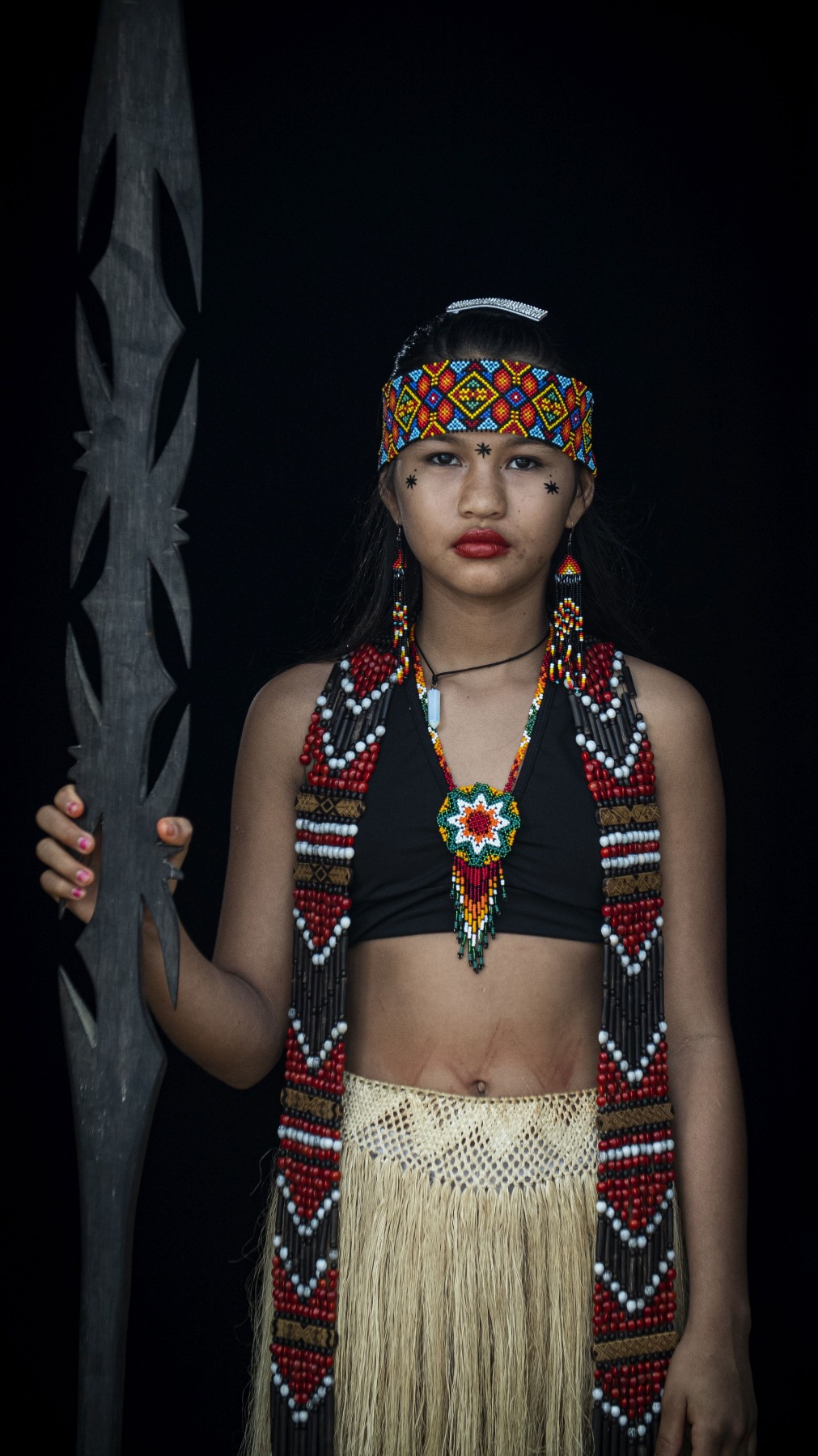
In the past, the Amazonian tribes sometimes fought each other ruthlessly. Now they are united. Has this been influenced by the political situation and their shared cause in the fight to preserve their historical heritage, traditions, and lands, or is it a natural evolutionary process for the tribes?
I think that in the past, our battles and wars centered on spiritual strength and power. And in a way, “contact with white people” was the reason we began to unite. It was the white man who came to destroy us, and later it was the white man who came to help and support us.
As humans, what is our role in the natural ecosystem as a whole? You said that nature doesn't need us. Then why were we born, and why do we still exist?
There are two sides to a person: the one that builds up and the one that tears down. We need nature so that we, as humans, can build a better life for ourselves. But we know full well that for many people, nature is merely something to be destroyed. Our greatest task is to learn to use nature wisely. We are the sons and daughters of the earth. But more often than not, it feels as if we’re here…and nature is over there. But we need to realize that this is the moment when we truly need each other—nature and us. Nature needs us today—it needs us to help protect it. And if we do this, we ourselves will live better—protected by the forests and the rivers.
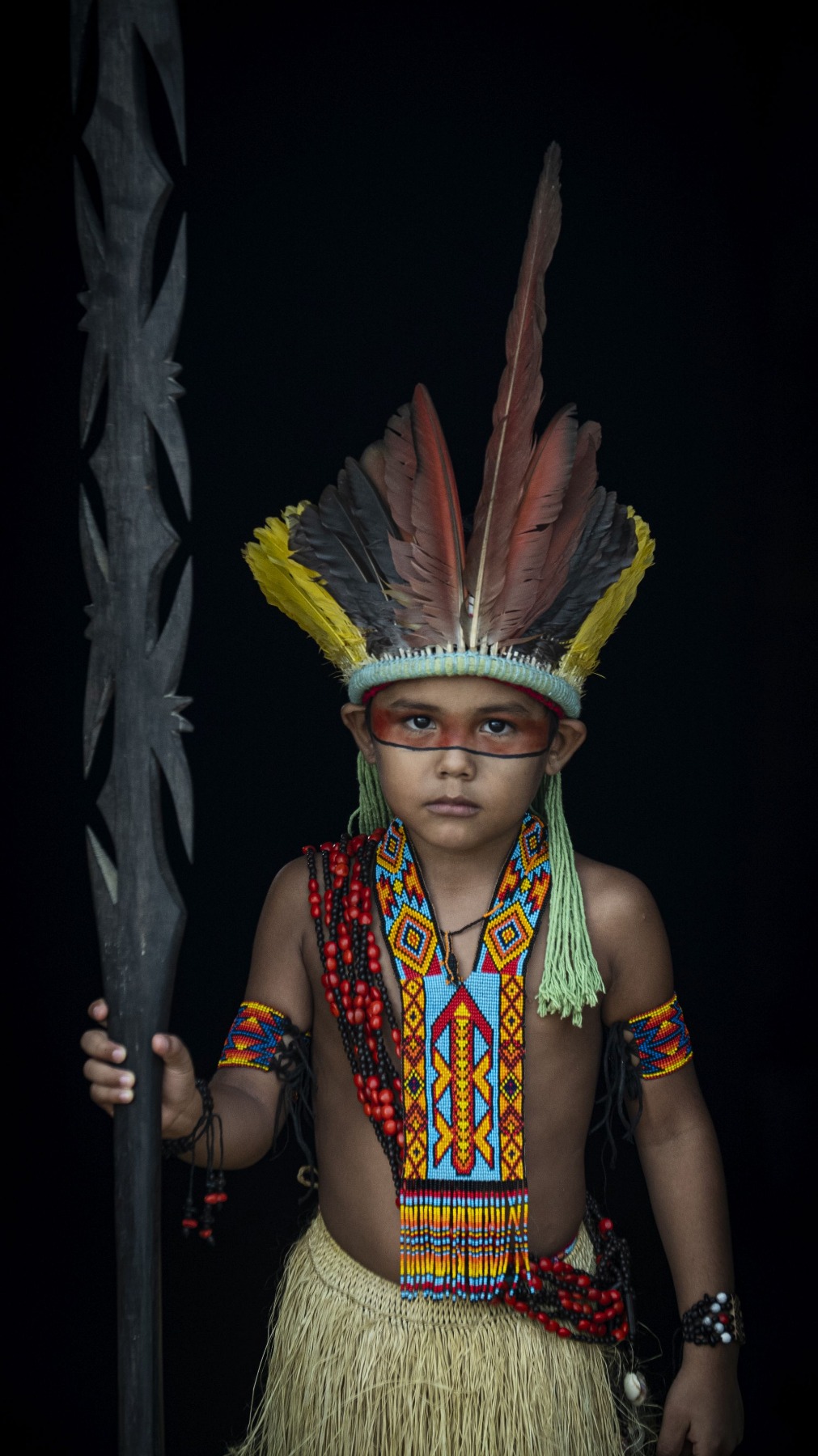
Isn't it true that right now nature is on the verge of kicking us out because we've crossed every red line?
I think that in many parts of the world, nature is already doing just that. Nature is very fierce. For example, it’s no surprise that the current coronavirus outbreak began in China, one of the countries that has most ruthlessly exploited the Earth’s natural resources. But we must nevertheless do everything we can to protect ourselves. After all, we all want to live happy lives. Do you know what this is [Puwe points to the sky, which the setting sun has colored a strange shade of red. – Ed.]? It’s a sunset that signals a stormy day ahead. Who taught me that? Our ancestors, because they had a deep understanding of the natural cycles of this planet, and I’ve inherited this knowledge from them.
Photos by Blat Garcia Verges and Adolf Sanz Monfort
*This interview with Puwe Puyanawa was conducted for the upcoming Arterritory.com publication *Arterritory Conversations: Detox and Healing for the Planet*, which will be published in May of this year.